
Physical Therapy — Shoulder
Understand it. Treat it. Get back to doing what you love.
Shoulder pain can trace back to a traumatic injury, repetitive overhead strain, or simply how the joint itself is built, and the result can be anything from impingement to a rotator cuff tear to frozen shoulder. Telling those apart is the whole job, which is why your evaluation is a full hour, one-on-one, with a licensed physical therapist. Physical therapy is one of the most evidence-based treatments for shoulder pain, whatever's behind yours.
Understanding Your Pain
What's actually causing your shoulder pain?
Shoulder pain can come from traumatic injury, repetitive overuse, or congenital and structural conditions. Each points toward a different diagnosis, and a different treatment plan.
Traumatic Injury
A fall, a direct blow, or a sudden wrenching motion can injure the shoulder's tendons, ligaments, or labrum in an instant.
Repetitive Overuse
Repeated overhead motion, whether from a job, a sport, or a training block, can gradually irritate the rotator cuff tendons and surrounding structures.
Congenital & Structural Conditions
Some shoulder pain traces back to how the joint is built, including structural variations that make impingement or instability more likely over time.
What We Treat
Common shoulder conditions we treat.
Subacromial Pain Syndrome (Shoulder Impingement)
Typically a non-traumatic, overuse injury that irritates the rotator cuff tendons as they pass between the shoulder blade and upper arm.
Adhesive Capsulitis (“Frozen Shoulder”)
An inflammatory thickening and tightening of the shoulder's joint capsule, leading to pain and a significantly limited range of motion.
Rotator Cuff Tears
Many rotator cuff tears are managed without surgery, and full pain-free function can often be achieved through physical therapy alone.
Post-Surgical Rehab
Structured rehabilitation after rotator cuff repair, total or reverse shoulder replacement, and labral repair, built around the specific protocol from the surgeon.
Next Steps
What to do about it.
A short list of what to try first, and the warning signs that mean this needs more than at-home care.
What to do about it.
- 1
Rule out the red flag symptoms first (see Red Flag Symptoms) before assuming this is routine shoulder soreness.
- 2
Modify whatever's aggravating it, especially repetitive overhead motion, but keep gentle, pain-free movement going.
- 3
Physical therapy is one of the most evidence-based, effective first-line treatments for shoulder pain, whether it's from overuse, injury, or post-surgical recovery.
- 4
One-on-one care matters here: a licensed physical therapist can tell the difference between impingement, a rotator cuff tear, and frozen shoulder, and build a plan around the right one instead of guessing.
Red flag symptoms.
Chest pain, shortness of breath, excessive sweating, or nausea alongside the shoulder pain
Call 911 or go to the nearest emergency room immediately if you notice this alongside shoulder pain.
Visible deformity or inability to move the shoulder at all after an injury
Fever, redness, or warmth around the shoulder joint
Unexplained weight loss, or shoulder pain that's worse at night and doesn't improve with rest
Seek prompt medical evaluation if you notice any of these.
Our Approach
Physical therapy treatment for shoulder pain.
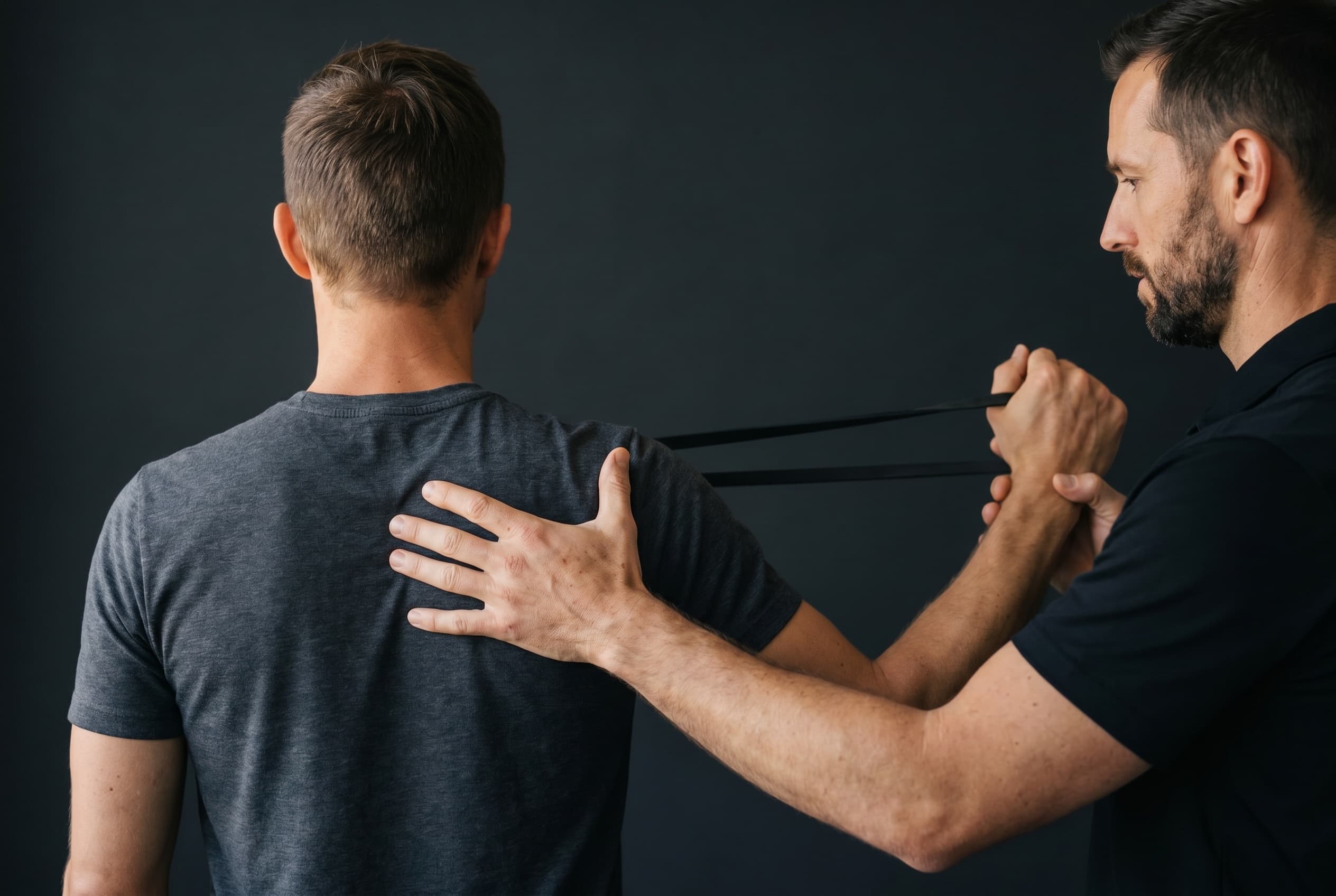
Every session is spent one-on-one with a licensed physical therapist, not shared between patients or handed off to an aide. That's what makes it possible to tell impingement, a rotator cuff tear, and frozen shoulder apart, and build the plan around the right one.
Manual Therapy
Joint and soft tissue mobilization to decrease pain and improve joint mobility and range of motion.
Exercise Therapy
Targeted exercises and stretches to improve flexibility, strength, endurance, and motor control for proper mobility, stability, and joint mechanics.
Adjunct Therapies
Dry needling, cupping, neuromuscular electrical stimulation, and hot/cold contrast therapy to further promote recovery and function.
Return to Performance
Performance training geared toward return to sport or activity after discharge from physical therapy, built around individual goals.
Surgical Evaluation
Need to see a surgeon first?
If the shoulder injury requires surgical evaluation, our partners at BONE DRs are right upstairs. We'll coordinate everything.
FAQ
Common shoulder pain questions.

Shoulder Rehab
Start your shoulder recovery today.
Book your first session and start working one-on-one with a PT who builds your plan around your shoulder, not a generic protocol.