
Physical Therapy — Hip
Hip pain relief, no matter the cause.
Osteoarthritis. Femoroacetabular impingement. A labral tear. Gluteal tendinopathy. IT band syndrome. Five different problems that can all show up as "pain when I move." The good news is that once we know what's driving it, the research is clear: physical therapy is one of the most effective first-line treatments for hip pain, whatever the cause turns out to be.
Understanding Your Pain
What's actually causing your hip pain?
The hip is a ball-and-socket joint, with the femoral head fitting into the socket of the pelvis, supported by cartilage, ligaments, and a wide network of surrounding muscles. Pain can come from overuse, muscle imbalance, age-related changes, or the underlying structure of the joint itself.
Overuse & Repetitive Strain
Running, repetitive impact, and sudden jumps in training volume can overload the hip faster than its muscles and tendons can adapt.
Muscle Imbalance & Weakness
The hip relies on the glutes, hip flexors, adductors, deep rotators, quadriceps, and hamstrings working together. Weakness in any of them can shift stress onto the joint itself.
Age-Related Joint Changes
The cartilage that helps the hip move smoothly naturally wears down over time, which can bring on stiffness and pain.
Structural Factors & Injury
A fall or traumatic injury, or the underlying shape of the femur and pelvis, can change how the ball and socket of the hip make contact.
What We Treat
Common hip conditions we treat.
Hip Osteoarthritis
Joint wear and tear that causes pain, stiffness, and reduced mobility.
Gluteal Tendinopathy
Irritation of the tendons on the outside of the hip that stabilize the pelvis.
Femoroacetabular Impingement (FAI)
Excessive contact between the hip bones, caused by the underlying shape of the femur or pelvis, that can cause pain and limited movement.
Labral Tears
Damage to the cartilage ring that helps stabilize the hip joint.
IT Band Syndrome
Irritation of the iliotibial band, often causing pain along the outside of the hip or knee.
Post-Surgical Rehab
Rehabilitation guided by the surgeon's specific protocol after hip surgery, such as total hip replacement, hip arthroscopy, or hip fracture fixation.
Next Steps
What to do about it.
A short list of what to try first, and the warning signs that mean this needs more than at-home care.
What to do about it.
- 1
Rule out the red flag symptoms first (see Red Flag Symptoms) before assuming this is a routine ache.
- 2
Modify whatever's aggravating it, especially running or repetitive impact, but keep gentle, pain-free movement going.
- 3
Physical therapy is one of the most evidence-based, effective first-line treatments for hip pain of any cause, whether it's overuse, structural, or post-surgical.
- 4
One-on-one care makes the difference: osteoarthritis, FAI, a labral tear, and gluteal tendinopathy can all feel similar from the outside, and a licensed physical therapist can spend the full session sorting out which one is actually driving the pain.
Red flag symptoms.
The pain follows a fall or other injury
Significant swelling around the hip
New or worsening weakness in the leg
Fever alongside hip pain
A sudden inability to bear weight on the leg
Seek medical attention right away if you notice any of the symptoms above.
Our Approach
Physical therapy treatment for hip pain.
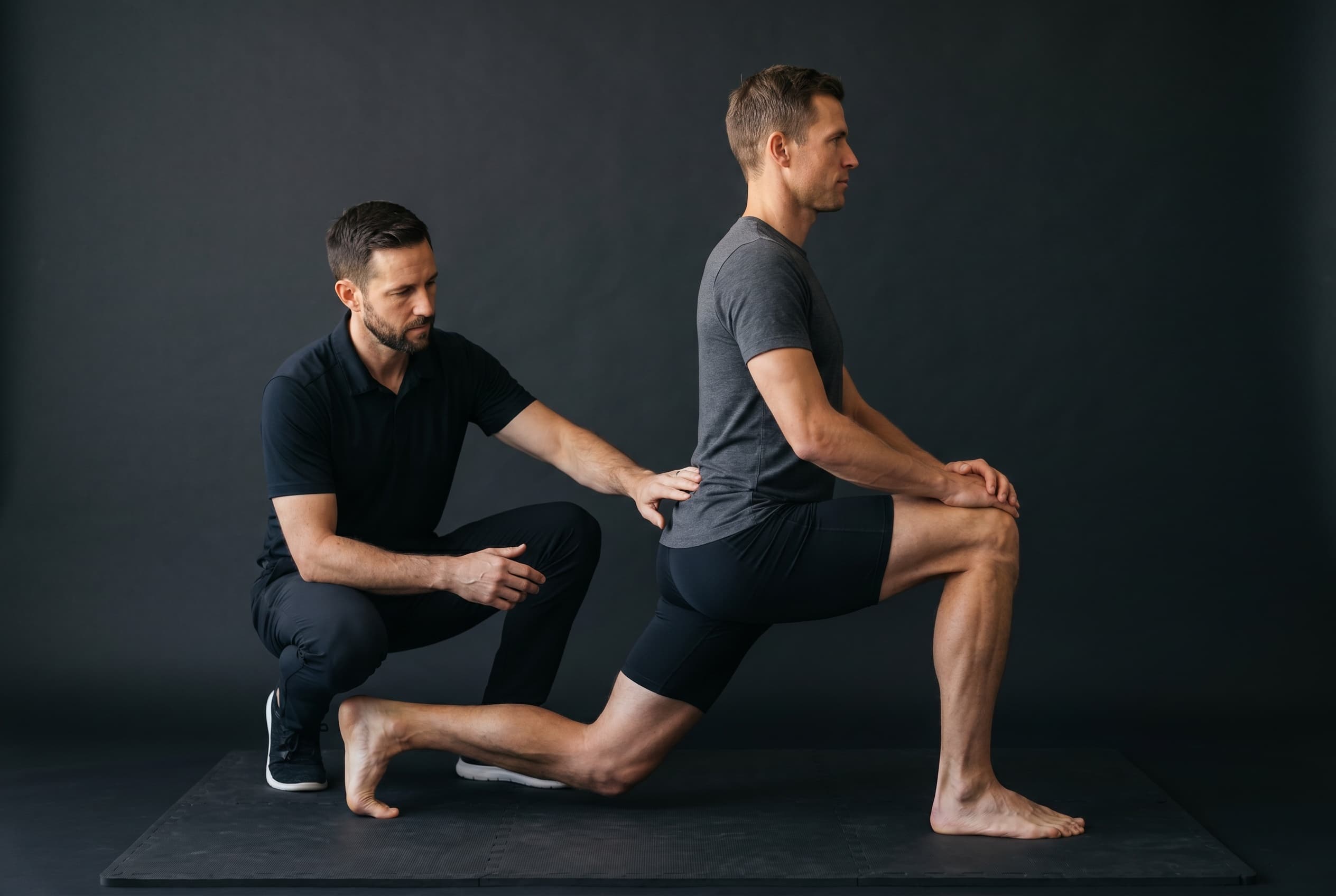
Every session is spent one-on-one with a licensed physical therapist, not shared between patients or handed off to an aide. That's what makes it possible to tell osteoarthritis, FAI, a labral tear, and gluteal tendinopathy apart, and build the plan around the right one.
Strengthening
Targeted exercises to improve hip, core, and leg muscle support.
Stretching & Mobility
Stretching and mobility work to increase flexibility and restore movement.
Manual Therapy
Hands-on treatment to reduce stiffness and improve joint and soft tissue mobility.
Balance & Gait Training
Balance, stability, and gait training to improve coordination, walking mechanics, and reduce stress on the hip.
Surgical Evaluation
Need to see a surgeon first?
If the hip injury requires surgical evaluation, our partners at BONE DRs are right upstairs. We'll coordinate everything.
FAQ
Common hip pain questions.

Hip Rehab
Start your hip recovery today.
Book your first session and start working one-on-one with a PT who builds your plan around your hip, not a generic protocol.