
Physical Therapy — Foot & Ankle
Get back to moving with confidence.
Achilles tendinopathy, plantar fasciitis, and an ankle sprain can all feel like "my foot hurts when I walk"… but they load, heal, and respond to exercise differently, so a plan built for one can slow down recovery from another. We spend a full hour, one-on-one with a licensed physical therapist, figuring out which one is actually yours before we design a treatment plan.
Understanding Your Pain
What's actually causing your foot or ankle pain?
Foot and ankle pain can come from overuse and repetitive impact, a sprain or other traumatic injury, or the footwear and biomechanics that put stress on the joint day after day.
Overuse & Repetitive Impact
Repetitive walking, running, jumping, or prolonged standing can gradually overload the structures of the foot and ankle.
Sprains & Traumatic Injury
Sprains, strains, and other traumatic injuries can damage the ligaments, muscles, or tendons around the foot and ankle in an instant.
Footwear & Biomechanics
Poor footwear, biomechanical abnormalities, or reduced strength and flexibility can place excessive stress on the foot and ankle over time.
What We Treat
Common foot and ankle conditions we treat.
Achilles Tendinopathy
Irritation of the long tendon attaching the calf muscles to the heel, commonly aggravated by sudden increases in walking or running mileage, or deficits in side-to-side ankle stability.
Plantar Fasciitis
Inflammation of the plantar fascia, the thick band of connective tissue along the sole of the foot, commonly linked to poor arch control, excess body weight, and tight or weak calves.
Ankle Sprains
Injury to the ligaments supporting the ankle, usually on the outer side, from forceful or repetitive rolling, resulting in pain, swelling, and instability.
Post-Surgical Rehab
Rehabilitation guided by the surgeon's specific protocol after foot and ankle surgery, such as Achilles tendon repair, fracture fixation, ankle replacement, or bunionectomy.
Next Steps
What to do about it.
A short list of what to try first, and the warning signs that mean this needs more than at-home care.
What to do about it.
- 1
Rule out the red flag symptoms first (see Red Flag Symptoms) before assuming this is a routine ache.
- 2
Modify whatever's overloading it, like running mileage or time on your feet, but keep gentle movement going within a comfortable range.
- 3
Physical therapy is one of the most evidence-based, effective first-line treatments for foot and ankle pain, whether it's from overuse, a sprain, or post-surgical recovery.
- 4
One-on-one care matters here: a licensed physical therapist can tell the difference between Achilles tendinopathy, plantar fasciitis, and ankle instability, and build a plan around the right one instead of guessing.
Red flag symptoms.
Severe pain or significant swelling
Visible deformity of the foot or ankle
Numbness in the foot or ankle
Signs of infection, such as redness, warmth, or fever
Inability to bear weight on the injured foot or ankle
Seek medical evaluation if you are experiencing any of the symptoms above.
Our Approach
Physical therapy treatment for foot and ankle pain.
Every session is spent one-on-one with a licensed physical therapist, not shared between patients or handed off to an aide. That's what makes it possible to tell Achilles tendinopathy, plantar fasciitis, and ankle instability apart, and build the plan around the right one.
Manual Therapy
Joint mobilizations and soft tissue treatment to improve foot and ankle mobility and reduce pain.
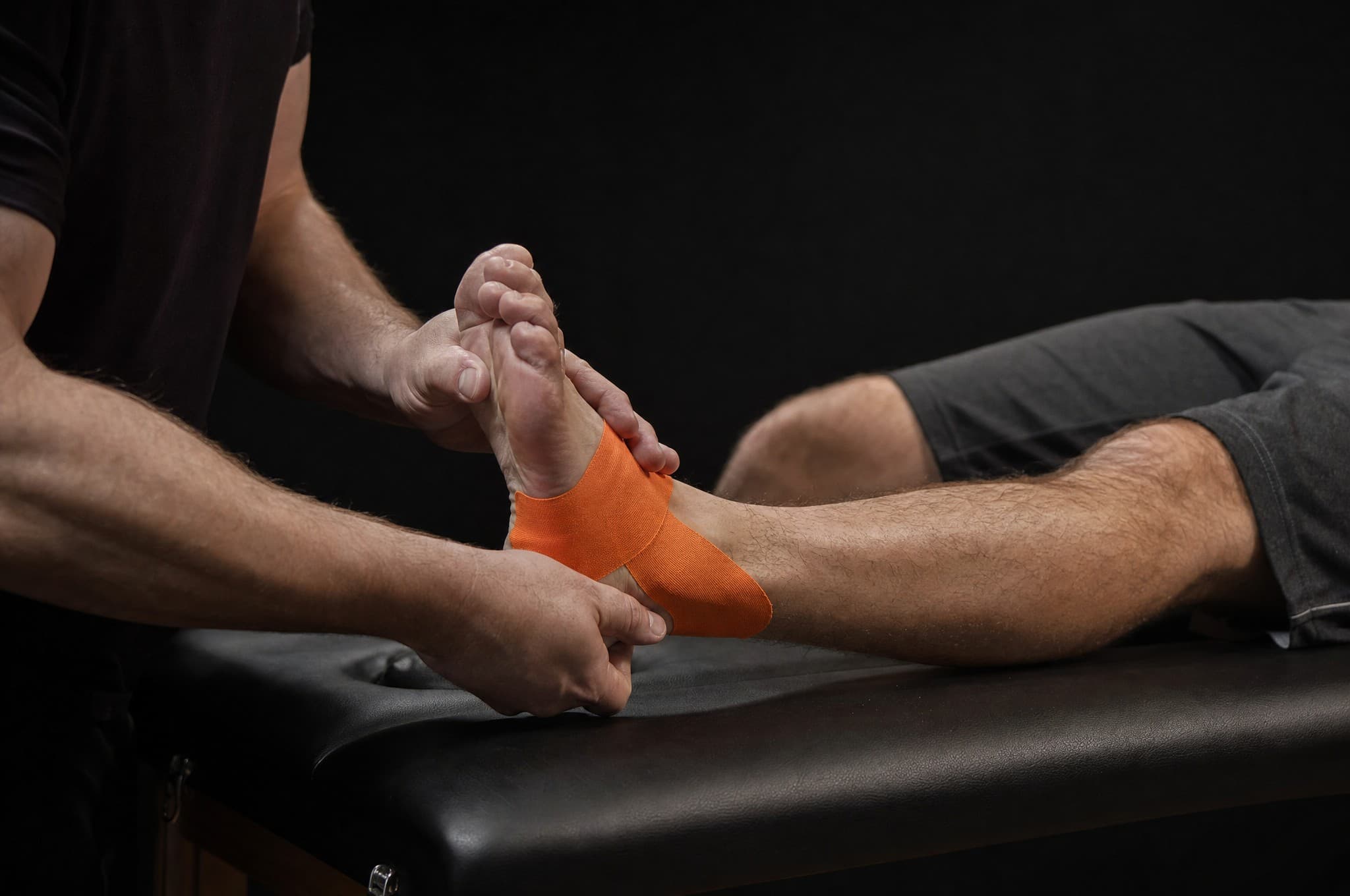
Taping & Bracing
Taping, bracing, or orthotic recommendations to provide support, improve alignment, and reduce strain on injured structures.
Therapeutic Exercise
Strengthening exercises for the foot, ankle, and lower leg, along with stretching programs for the calf, Achilles tendon, and plantar fascia.
Balance & Proprioception
Balance and proprioceptive training to improve coordination and reduce the risk of recurrent ankle injuries.
Surgical Evaluation
Need to see a surgeon first?
If the foot or ankle injury requires surgical evaluation, our partners at BONE DRs are right upstairs. We'll coordinate everything.
FAQ
Common foot and ankle questions.

Foot & Ankle Rehab
Start your recovery today.
Book your first session and start working one-on-one with a PT who builds your plan around your foot and ankle, not a generic protocol.